

Executive Summary
Nearly 2,000 public safety professionals responded to this year's survey. The responses were wide-ranging, but the theme was consistent—a workforce under constant pressure. The data pointed to a recurring pattern: a gap between what agencies know they need to do and their ability to execute it.
This report examines five trends widening that gap in 2026
- Workforce strain is now structural. Staffing shortages, high vacancy rates, and increased overtime are no longer temporary disruptions. They're the new operating environment.
- Hiring friction limits recruiting. Agencies are losing viable candidates to slow and complex internal processes.
- Efficiency depends on data and visibility. Most agencies want to improve operations, but lack the systems and analytics to do it consistently.
- AI adoption is outpacing readiness. Early experimentation is growing, but governance, policy, and training are not keeping up.
- Change fails at execution, not awareness. Agencies know what needs to change. The limiting factor is the capacity and infrastructure to follow through.
The Public Safety Readiness Gap
Public safety agencies in 2026 are navigating a workforce crisis that goes beyond staffing numbers. Recruiting is harder. Operations are strained. New technologies are arriving faster than agencies can keep up. And the pressure to do more with less has never been greater.
Most agencies understand these challenges. The problem is acting on them effectively. That distance—between knowing and doing—is the readiness gap, and it isn't driven by a single cause. Across all five trends examined in this report, the same factors appeared consistently:
- Capacity constraints: Staffing shortages and heavy workloads leave little room for new initiatives. When teams are stretched thin, progress competes with daily operations.
- Lack of systems and processes: Many agencies have clear strategies but lack the tools, workflows, and standardization needed to execute them consistently.
- Misalignment between leadership and staff: When leaders and frontline staff see the same problems differently, even the best initiatives can stall during implementation.
- Policy and training gaps: Agencies move faster than their policies and training can support, especially in areas like AI adoption and change management.
- Limited operational visibility: Inconsistent use of data and analytics means many agencies make decisions without a full picture of what's working and what isn't.
These factors don't operate independently. They reinforce each other, making it harder
for agencies to gain traction, even when the direction is right.
Who We Heard From
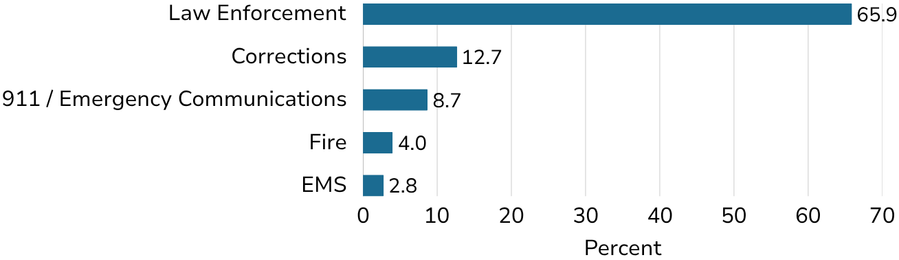
This report draws on responses from 1,975 public safety professionals. The respondents span a wide range of agency types, with law enforcement making up the largest share at 65.9%, followed by corrections, emergency communications, and fire/EMS. Agency sizes range from small departments to large, multi-jurisdictional organizations.
What to Expect
The five trends that follow examine where the readiness gap is widening, what's driving it, and what leaders can do about it. Each trend is grounded in survey data, informed by the voices of public safety professionals, and focused on the implications that matter most for your agency this year.